Tradition
The Tradition Behind the Practice
The clinic's approach includes traditional Ayurvedic formulations guided by teachings passed down through gurus and refined through long practical experience.
Rooted in 5,000 Years of Living Wisdom
Ayurveda — the science of life — is one of the oldest continuously practised systems of medicine in human history. Codified in classical texts like the Charaka Samhita, Sushruta Samhita, and Ashtanga Hridaya, it was conceived not merely as a way to address illness, but as a complete system for understanding human existence. These texts, written by clinicians who observed and documented over generations of direct patient care, remain the foundation of what is practised at this clinic today. Explore the full history of Ayurveda.
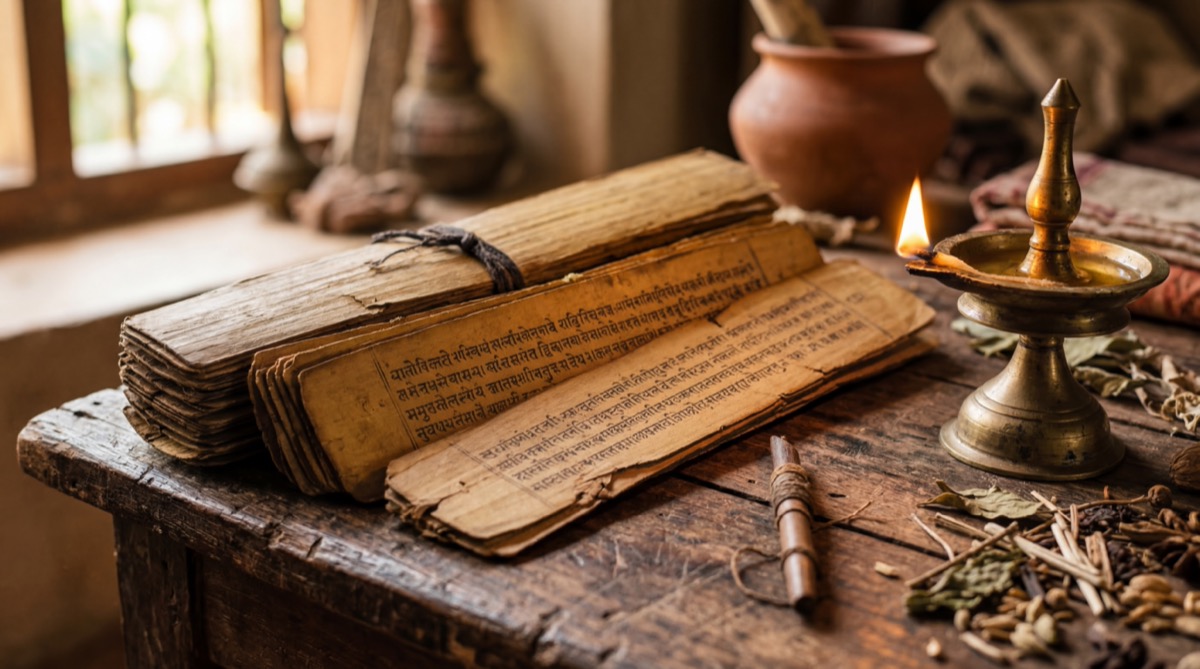
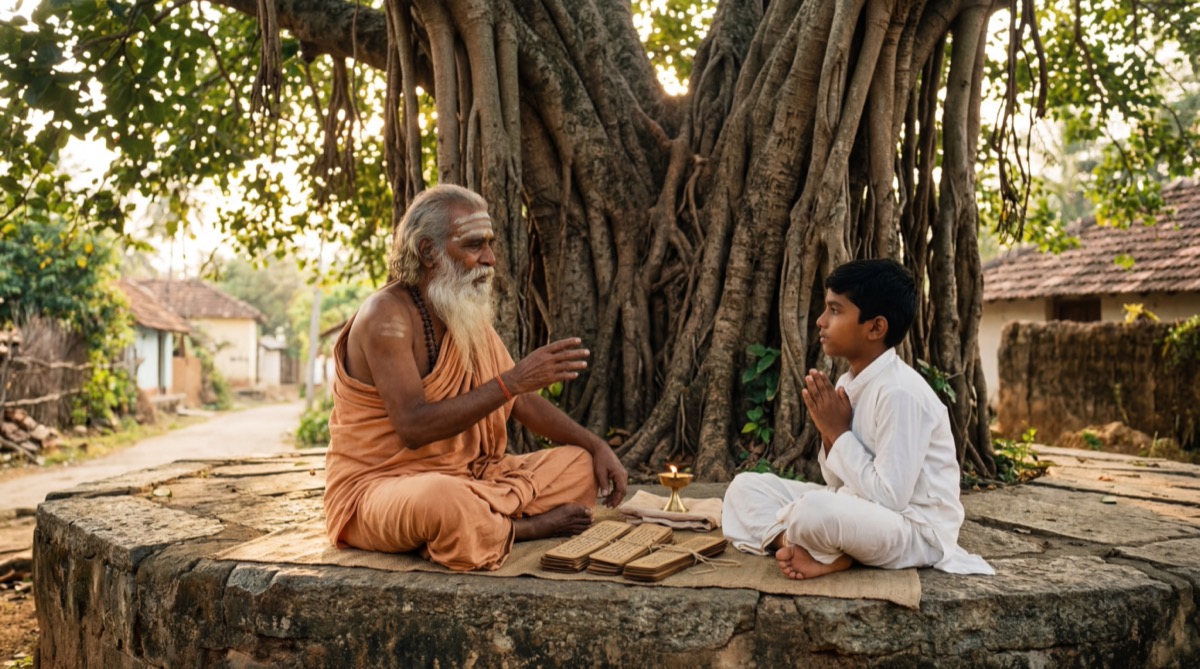
A Living Tradition, Not Textbook Knowledge Alone
The knowledge followed at the clinic did not come from books alone — it came through Guru Parampara, the unbroken chain from teacher to student. Each generation practises, observes, refines, and passes forward a living understanding enriched by their own clinical experience. Dr Sri Ramulu received his Ayurvedic knowledge through this lineage, translating decades of dedicated practice into the formulations and methods he follows today.
The Ayurvedic Framework — Elements, Doshas, and Eight Branches
Ayurveda understands the human body through a layered framework. At the base are five elements (Panchamahabhuta) — Earth, Water, Fire, Air, and Space — which combine to form three governing forces called doshas: Vata (movement), Pitta (transformation), and Kapha (structure). Every person is born with a unique balance of these doshas — your Prakriti — and when that balance shifts due to diet, season, or stress, the practitioner works to restore it. The classical texts organised this science into eight branches (Ashtanga), covering everything from internal medicine and mother-child care to rejuvenation and mental wellness. Understand your unique Prakriti.
How the Practitioner Assesses You
The classical texts describe Ashtavidha Pariksha — eight methods of examination — that a practitioner uses to understand your condition before any formulation is chosen. These include Nadi Pariksha (pulse reading), observation of the tongue, skin, and eyes, questioning about diet, sleep, digestion, and daily habits, and assessment of voice, body build, and mental state. This is not a quick checklist — it is a thorough, unhurried process where the practitioner builds a complete picture of who you are, not just what symptoms you have. At the clinic, this careful individual assessment is the foundation of every consultation. What to expect at your first consultation.
Nidana — Addressing the Root, Not Just the Symptoms
The Charaka Samhita teaches that treating symptoms without understanding their origin is like cutting the branches of a weed while leaving the root intact — it will return. This principle, called Nidana Parivarjana (removing the cause), is central to how this tradition approaches every concern. Rather than suppressing what is visible, the practitioner seeks to understand the chain of imbalance — from its origin in improper diet, lifestyle, or seasonal change, through the stages of dosha aggravation, to its final manifestation as symptoms. When the body accumulates Ama (metabolic waste), recurring concerns like skin issues or digestive discomfort are addressed through dietary changes, digestive support, and formulations chosen for the individual’s constitution.
Formulations Guided by Tradition, Chosen With Care
The classical texts describe thousands of formulations — each with precise ingredients, proportions, preparation methods, and indications. These are not recipes invented by any one person; they represent the accumulated clinical wisdom of countless practitioners over millennia, documented and refined through rigorous observation. At the clinic, formulations draw on this deep well of knowledge. Each is selected based on the person's unique constitution, the nature and stage of their imbalance, and the season — reflecting a tradition that values precision, patience, and personal attention above all.
Natural Ingredients, Time-Tested Methods
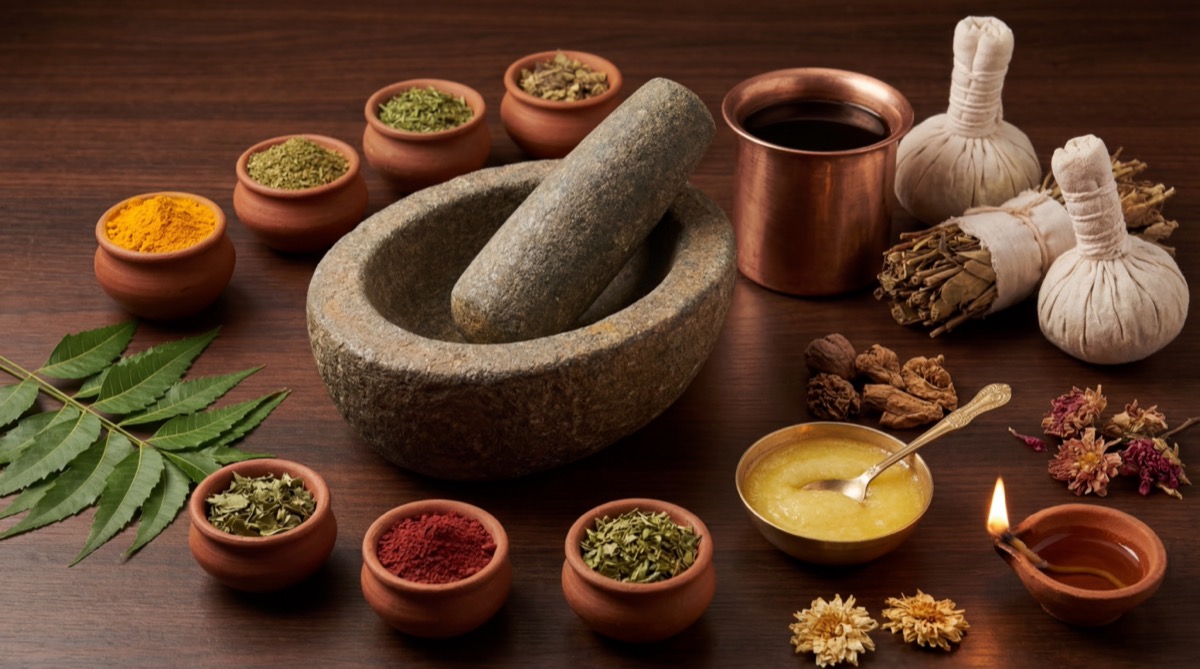
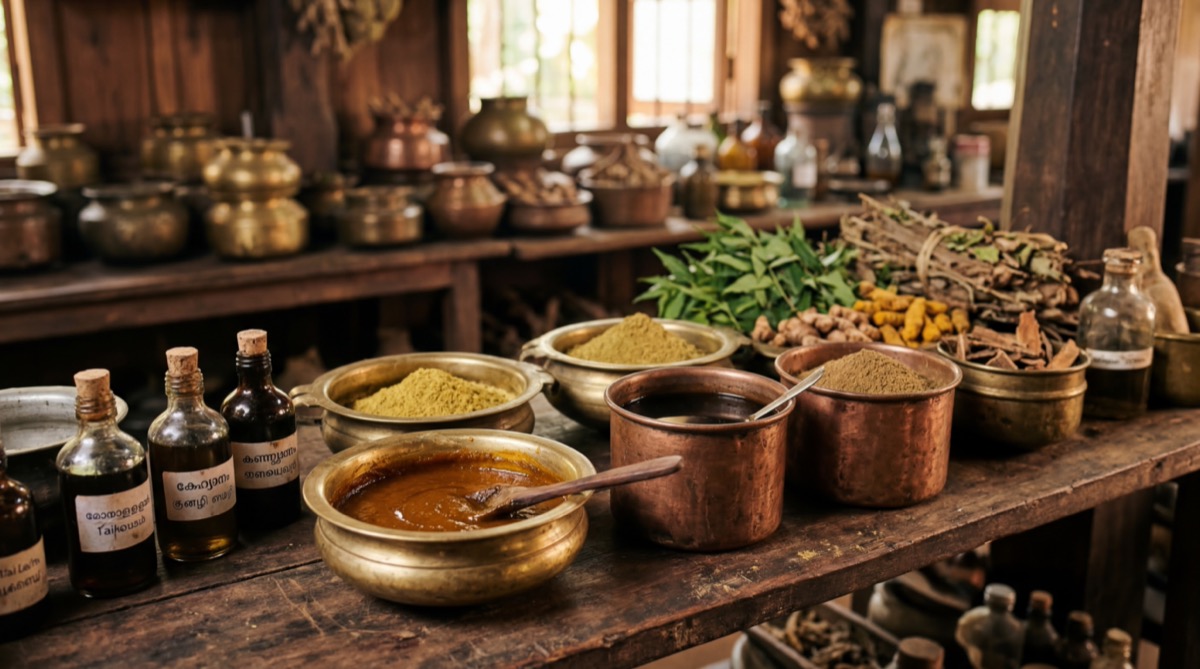
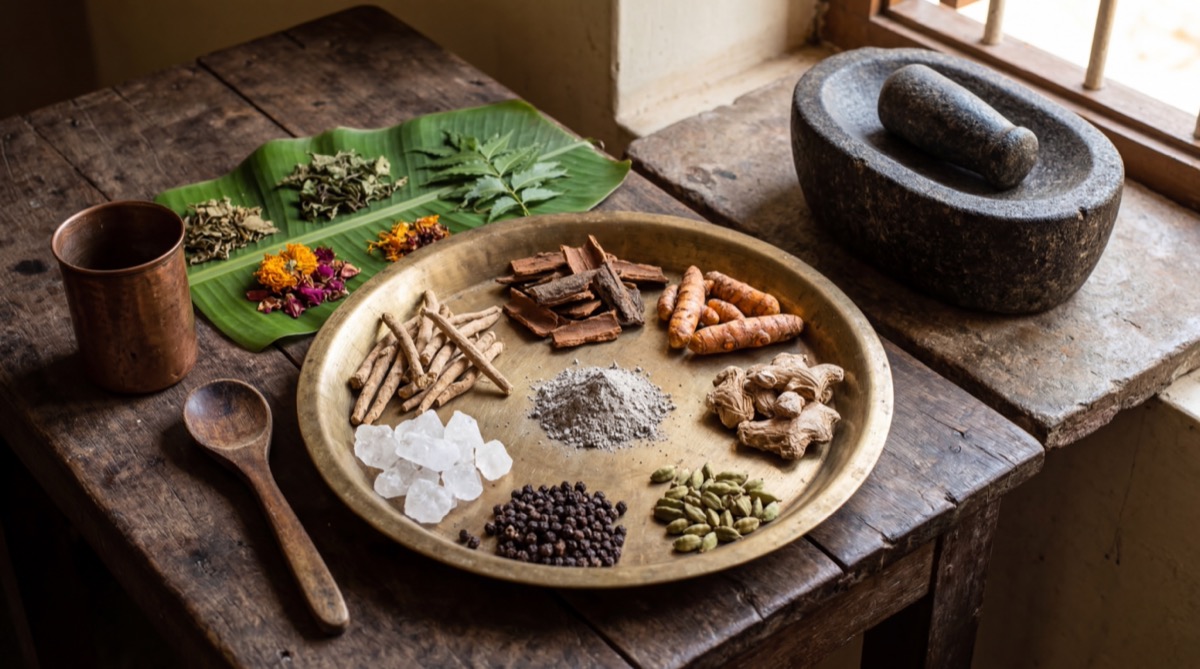
The formulations used at the clinic are prepared using herbs, roots, minerals, and other natural ingredients — materials that nature provides and that the classical texts classify by their Rasa (taste), Guna (quality), Virya (potency), and Vipaka (post-digestive effect). This classification system, developed thousands of years ago, allows the practitioner to predict with precision how each ingredient will interact with a particular constitution. Whether in the form of kashayam, lehyam, churnam (often provided in easy-to-take capsule form), or other traditional preparations, each formulation is chosen and prepared with care, based on what the individual review indicates. This approach draws on the Rasayana tradition of rejuvenation and tissue nourishment.
How Medicines Are Prepared
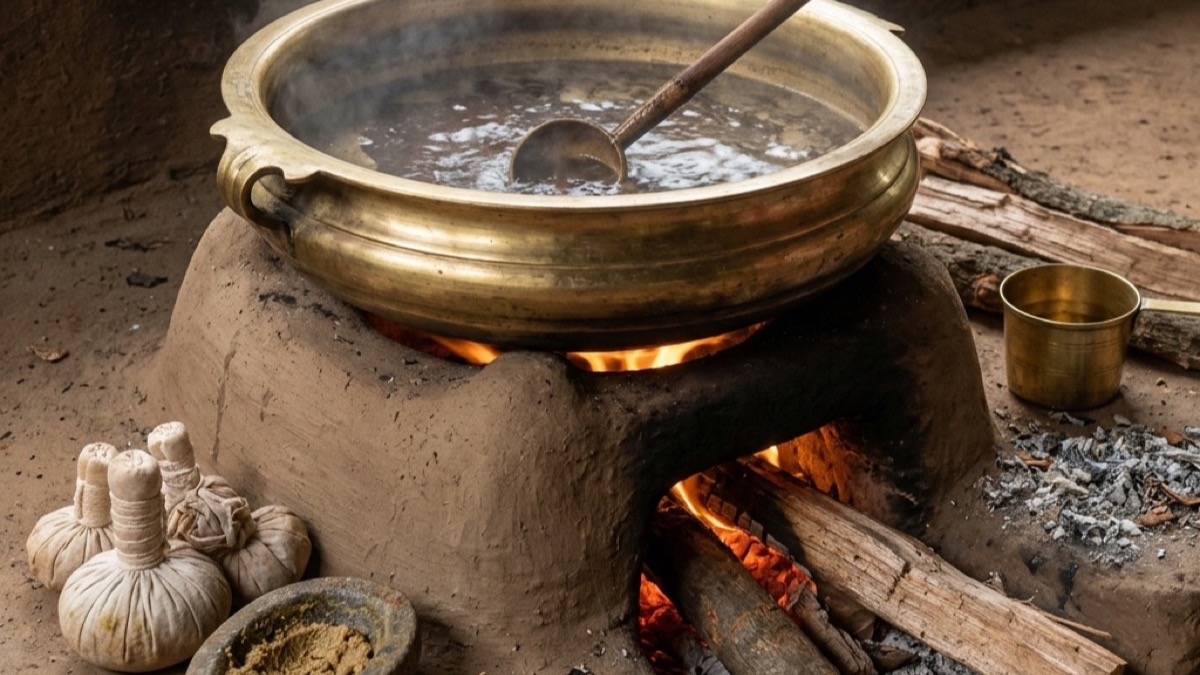
In the Ayurvedic tradition, the preparation of medicine is itself considered a sacred act — not a manufacturing process. The classical texts specify exact sequences of heating, cooling, grinding, filtering, and resting for each type of formulation. At the clinic, these traditional methods are followed with the same rigour they have been for centuries. Some preparations involve slow processing over fire for three to five days. Others require the base material to be purified through Shodhana — seven or more cycles of treatment — before the formulation is considered ready. These are not shortcuts. They are methods carried forward from a tradition that understood something modern science is now confirming: that how a substance is processed fundamentally changes its properties.
Kashayam
Decoction
Herbs and roots are slowly reduced over a controlled flame, sometimes over several hours, until the liquid concentrates to a precise proportion — traditionally one-fourth or one-eighth of the original volume. The timing, heat, and sequence follow guidelines from the Sharangadhara Samhita, refined through generations of practice.
Requires careful attention to flame and timing throughout
Lehyam
Semi-solid preparation
A careful process of combining prepared herbal bases with ghee, honey, or jaggery, cooked slowly over regulated heat until the mixture reaches the classical consistency tests — the point where it holds together without sticking. Some lehyam preparations require three to five days of patient, attentive processing over fire.
Some preparations take 3–5 days of slow processing over fire
Churnam
Powder
Ingredients are dried under specific conditions, ground in stages, and sieved to achieve a precise fineness. Mineral-based preparations undergo Shodhana — purification through repeated cycles of heating, quenching, and processing — seven or more times before they meet the classical standard. Churnam is often provided in capsule form for ease of use.
Some ingredients purified 7+ times through Shodhana before use
This attention to preparation reflects a broader principle rooted in the classical texts: the potency of a formulation depends not only on what goes into it, but on how it is made. The care taken at each stage — the precise heat, the exact duration, the number of purification cycles — is part of what families have trusted across generations.
Ahara and Vihara — Diet and Lifestyle as Medicine
The Charaka Samhita states that even without medicine, a person who follows the right diet can be healthy — and even with the best medicine, a person who ignores diet cannot be fully well. This is why Ayurveda places Ahara (diet) and Vihara (lifestyle) at the very centre of healing, not as supplements to medicine but as medicine itself. What you eat, how you sleep, and how you structure your daily routine (Dinacharya) are considered essential. The practitioner may offer guidance on dietary adjustments aligned with your Prakriti, the current season (Ritucharya), and the specific nature of your imbalance — supporting your body's own intelligence to restore balance.
The Role of Follow-Up Care
In the classical tradition, a practitioner's relationship with a patient was never a single encounter. The great texts describe a process of Paricharya — ongoing care — where the practitioner observes how the body responds to each formulation, adjusts the approach as the seasons change, and refines guidance over time. Follow-up consultations allow the practitioner to assess progress, modify formulations, and ensure that the path of healing adapts to your body's changing needs. Learn what to expect during long-term Ayurvedic care.
What This Means for You
When you visit, you receive guidance shaped by a tradition that is not decades old but millennia old — a system documented in the Charaka Samhita, the Sushruta Samhita, and the Ashtanga Hridaya, carried forward through an unbroken chain of practitioners, and brought to you through Dr Sri Ramulu\u2019s own half-century of dedicated practice. This is not a theoretical framework. It is a living science, refined through real experience with real families, across generations.
Begin a Conversation With the Clinic
To learn more or speak with the clinic about consultation availability, reach out directly.