
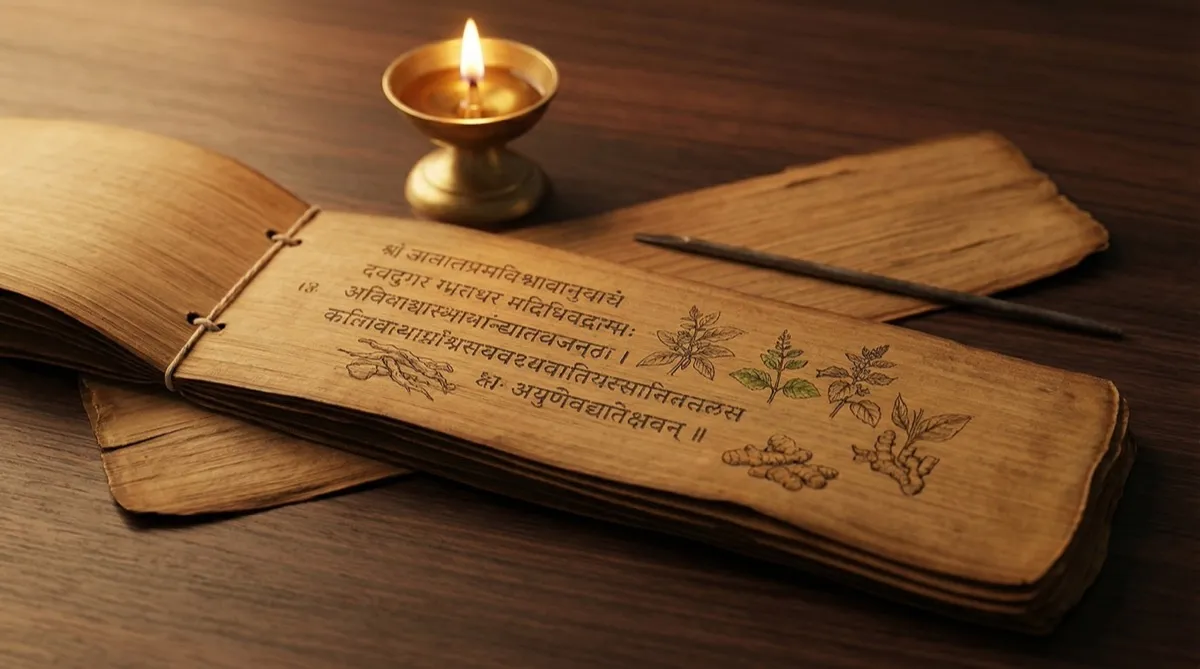
Why This Glossary Exists
When you visit an Ayurvedic practitioner for the first time, you will hear terms like Agni, Ama, Dosha, and Prakriti. These are not decorative jargon — they are precise clinical concepts with specific meanings that have been refined over thousands of years. Understanding them helps you understand why your practitioner recommends what they do. This glossary covers the terms you are most likely to encounter, organised alphabetically. Where a term connects to a deeper article on this site, we have linked to it so you can explore further.
What makes Ayurvedic terminology remarkable is that these are not ancient relics with historical interest alone. They are working clinical vocabulary — used daily by practitioners across India and increasingly worldwide — because no modern equivalent captures the same precision. When a practitioner says “Mandagni,” they are communicating a specific clinical picture (slow, weak digestive fire with heavy, sluggish digestion) that would take an entire paragraph to describe in modern medical language. Each term below is a compressed insight — the distillation of thousands of years of clinical observation into a single word.
A
- Abhyanga
- Oil massage using warm, herb-infused oils selected for your constitution. Abhyanga is not a spa treatment — it is a therapeutic practice described in the Charaka Samhita as part of Dinacharya (daily routine). The oil nourishes skin, calms Vata dosha, supports circulation, and helps the body release accumulated tension. The choice of oil depends on your Prakriti and the season.
- Agni
- Digestive fire — the single most important concept in Ayurvedic clinical practice. Agni is not just stomach acid. It is the body’s entire capacity to digest food, absorb nutrients, and transform what you eat into tissue. When Agni is strong, digestion is complete and no waste accumulates. When Agni weakens, undigested material (Ama) builds up and becomes the root of most chronic conditions. Charaka Samhita states: “The span of life, health, immunity, energy, metabolism — all depend on Agni.” There are 13 types of Agni described in the classical texts, governing different levels of metabolism. Read the full article on Agni and Digestion.
- Ahara
- Food and diet. In Ayurveda, Ahara is considered one of the three pillars of life (Trayopastambha), alongside sleep (Nidra) and managed conduct (Brahmacharya). Food is not categorised by calories or macronutrients but by its taste (Rasa), qualities (Guna), post-digestive effect (Vipaka), and specific potency (Prabhava). The same food can be medicine for one person and harmful for another, depending on their constitution and current state.
- Ama
- The silent troublemaker behind most chronic conditions. Ama is the toxic, sticky residue that forms when Agni is too weak to fully digest food. Picture it this way: a well-burning fire leaves only fine ash, but a smouldering one leaves thick, tar-like residue. That residue is Ama. It is heavy, cloudy, and foul-smelling — the exact opposite of healthy tissue. Ama first accumulates in the digestive tract, then hitches a ride through the Srotas (channels) and lodges wherever the body is weakest, laying the groundwork for disease. A coated tongue in the morning is one visible sign. The concept maps remarkably well onto modern research into gut permeability, endotoxins, and chronic low-grade inflammation. Much of Ayurvedic treatment is fundamentally about two things: stopping Ama production (by strengthening Agni) and clearing the Ama that has already accumulated. Read the full article on Understanding Ama. Also see: Agni and Digestion.
- Anupana (అనుపానం)
- The carrier substance taken along with a medicine to enhance absorption and direct it to the target tissue. Common anupanas include warm water (most universal), honey (for Kapha conditions — scraping, drying), ghee (for Vata and Pitta conditions — nourishing, cooling), and warm milk (for Shukra/reproductive tissue nourishment). The choice of Anupana is not arbitrary — it is selected based on the patient’s constitution, the condition being addressed, and the nature of the medicine itself. Charaka describes Anupana as having the power to carry the medicine’s effect to specific tissues (dhatus) and channels (srotas). Taking a medicine with the wrong vehicle can reduce its effectiveness or create unwanted effects. See the Understanding Your Prescription guide for practical guidance on carriers.
- Ashtanga (Eight Branches)
- The eight specialised branches of Ayurvedic medicine: Kaya Chikitsa (internal medicine), Shalya Tantra (surgery), Shalakya Tantra (ENT and ophthalmology), Kaumara Bhritya (paediatrics), Agada Tantra (toxicology), Bhuta Vidya (psychiatry), Rasayana (rejuvenation), and Vajikarana (reproductive medicine). These were established over 2,500 years ago — meaning Ayurveda had medical specialisation millennia before modern medicine developed equivalent fields. Explore the eight branches in the History article.
- Achara Rasayana
- Behavioural rejuvenation — the practice of using ethical conduct, mental discipline, and wholesome social behaviour as a form of Rasayana (rejuvenation therapy). Charaka Samhita describes Achara Rasayana as equal in power to herbal Rasayana formulations: truthfulness, non-anger, compassion, cleanliness, regular spiritual practice, and respectful conduct toward elders are listed as rejuvenating behaviours. The reasoning is that mental states directly affect tissue quality (Dhatu Sara) and immunity (Ojas). Chronic negativity, dishonesty, and hostility deplete Ojas just as surely as poor diet does. This is not a moral prescription — it is a clinical observation that modern psychoneuroimmunology is now validating. Read more in the Rasayana article.
- Agada Tantra
- The branch of Ayurveda dealing with toxicology — the study, prevention, and management of poisoning from animal bites, plants, minerals, and environmental toxins. Agada Tantra is one of the eight branches (Ashtanga) of Ayurveda. The classical texts describe elaborate classification of poisons (Sthavara from plants, Jangama from animals, Kritrima from artificial sources), their effects on different Doshas, and specific antidotal approaches. This branch also covers the concept of cumulative toxicity — how small, repeated exposures to incompatible substances can produce chronic conditions, a concept remarkably aligned with modern environmental toxicology. Read about all eight branches.
- Amavata
- A condition where Ama (metabolic toxins from poor digestion) combines with aggravated Vata dosha and lodges in the joints and tissues. Amavata is the classical Ayurvedic understanding of inflammatory joint conditions. Madhava Nidana describes it as beginning with weak Agni, progressing through Ama formation, and culminating when Vata carries this Ama into joint spaces, causing pain, stiffness, and swelling. The treatment approach addresses root causes — strengthening Agni, clearing Ama through Langhana and Deepana, and then pacifying Vata — rather than merely suppressing symptoms. This multi-layered approach explains why Ayurvedic management of joint conditions takes time but often produces more sustained results.
- Ashmari
- The Ayurvedic term for urinary calculi (stones). Sushruta Samhita provides a remarkably detailed classification of Ashmari by type (Vataja, Pittaja, Kaphaja, and Shukraja), each with distinct characteristics, causative factors, and management approaches. The classical texts describe Ashmari as arising from improper diet and lifestyle that vitiate specific Doshas, which then affect the Mutravaha Srotas (urinary channels). The Ayurvedic approach focuses on prevention through dietary adjustments, supporting kidney function, and addressing the underlying Dosha imbalance. Read about kidney and urinary wellness.
B
- Bala (Three Types of Strength)
- Strength in Ayurveda is not a single number on a scale — it comes in three distinct types, and your practitioner assesses all three before planning treatment. Sahaja Bala is the strength you are born with, wired into your constitution (Prakriti) and unchangeable. Kalaja Bala is the strength that fluctuates with time — your age, the season, and even the time of day affect it (you are naturally stronger in youth and in winter, weaker in old age and summer). Yuktikrita Bala is the only type you can actively build: through proper diet, exercise, Rasayana therapy, and lifestyle adjustments. A practitioner who understands your Bala profile will never over-treat or under-treat — they calibrate the intensity of Panchakarma, the strength of formulations, and the pace of recovery to match what your body can actually handle.
- Basti
- One of the five Panchakarma procedures — a medicated enema therapy considered the most important of all Panchakarma actions. Basti directly addresses Vata dosha (which resides primarily in the colon) and is used for a wide range of chronic conditions. Charaka calls Basti “half of the entire treatment” (Ardha Chikitsa) because of its broad clinical reach. There are multiple types: Anuvasana (oil-based) and Niruha (decoction-based), each selected based on the condition and constitution.
- Bheshaja Kala (భేషజ కాలం)
- The timing of medicine administration — one of the most important factors in Ayurvedic pharmacology. Charaka describes specific timings: before food (Abhakta — for downward-moving conditions), after food (Adhobhakta — for upper body conditions), with food (Sagrasa — for conditions of the middle body), between meals (Antarabhakta — for heart/digestive conditions), and at bedtime (Nishi — for conditions above the shoulders or Vata conditions that worsen at night). The principle is that timing determines which Agni and which Srotas the medicine encounters first.
- Bhuta Agni
- The five elemental fires — a subtle layer of metabolism that operates after Jatharagni (the main digestive fire) has done its work. Each of the five Pancha Mahabhutas (earth, water, fire, air, space) has its own Agni that further processes nutrients into element-specific forms that each tissue can absorb. Bhuta Agni explains why someone can have adequate digestion (no obvious Ama) yet still suffer from specific tissue deficiencies: the main fire may be working, but one or more elemental fires may be impaired. This concept anticipates what modern nutrition science calls “nutrient-specific malabsorption” — the ability to digest food overall while struggling with particular micronutrients. Read more about Agni types.
- Bhuta Vidya
- The branch of Ayurveda concerned with mental and psychological conditions — often translated as “psychiatry” but encompassing a broader scope. Bhuta Vidya addresses conditions of the mind (Manas), including anxiety, depression, psychosis, seizures, and conditions attributed to unseen influences. The classical texts describe detailed psychological assessment frameworks, the role of Sattva, Rajas, and Tamas in mental health, and specific therapeutic approaches combining herbal formulations, dietary adjustments, counselling (Sattvavajaya Chikitsa), and spiritual practices. This is one of the eight branches (Ashtanga) of Ayurveda. Explore all eight branches.
- Brimhana
- Nourishing or building therapy — the opposite of Langhana (reducing therapy). Brimhana aims to increase body mass, strength, and tissue bulk. It is indicated when tissues are depleted (Dhatu Kshaya), after prolonged illness, in elderly patients, or in constitutionally thin Vata-dominant individuals. Brimhana involves nourishing foods (ghee, milk, meat broths in classical practice), Rasayana formulations, oil massage (Abhyanga), and rest. The principle is simple but clinically precise: not every patient needs cleansing. Some need building. A skilled practitioner knows when to reduce and when to nourish — and getting this wrong can worsen the condition significantly.
- Brihat Trayi
- The “Great Triad” — the three foundational texts of Ayurveda: Charaka Samhita (internal medicine, circa 300 BCE), Sushruta Samhita (surgery, circa 600 BCE), and Ashtanga Hridaya by Vagbhata (synthesis, circa 7th century CE). Together they form the most comprehensive medical literature the ancient world produced. All three are still studied and clinically applied today. Read about the Brihat Trayi in the History article.
C
- Charaka
- The ancient physician-sage credited with compiling the Charaka Samhita, the foundational text of Ayurvedic internal medicine (Kaya Chikitsa). Charaka (circa 300 BCE, though the knowledge he compiled is far older) did not merely list remedies — he established the logical framework for understanding disease: the relationship between Agni, Ama, Dosha, and Dhatu that practitioners still use today. His approach was remarkably scientific for its era — emphasising observation, rational inference, and systematic classification over dogma. The Charaka Samhita contains roughly 8,400 verses organised into 120 chapters and remains the most-cited Ayurvedic text in clinical practice worldwide. Read about Charaka in the History article.
- Chikitsa
- Treatment or therapy. In Ayurveda, Chikitsa is not a single intervention but a comprehensive management strategy that always addresses the root cause (Nidana) rather than suppressing symptoms alone. The classical texts describe Chikitsa as operating on three levels simultaneously: Daiva Vyapashraya (spiritual measures), Yuktivyapashraya (rational therapeutics including diet, medicine, and Panchakarma), and Sattvavajaya (psychological counselling). A complete Chikitsa plan includes Shodhana (purification) when needed, Shamana (palliative treatment), Pathya-Apathya (dietary do’s and don’ts), and Nidana Parivarjana (removing the causative factors). This multi-dimensional approach is why Ayurvedic treatment plans involve lifestyle changes alongside medicines.
D
- Deepana
- Kindling the digestive fire — therapies, foods, or herbs that specifically strengthen Agni without directly digesting Ama. Deepana is distinct from Pachana (which digests existing Ama). Think of it this way: if your digestive fire is a smouldering campfire, Deepana is adding kindling to make it burn brighter, while Pachana is the fire actually burning through the undigested material. In practice, your practitioner may use Deepana before Pachana — first strengthening the fire, then letting it do its work. Common Deepana substances include ginger, cumin, and black pepper. This sequencing (Deepana first, then Pachana) is a fundamental principle of Ayurvedic treatment strategy.
- Dhanvantari
- The divine physician of Ayurveda — regarded as the origin and patron deity of the medical tradition. According to the Puranic texts, Dhanvantari emerged from the ocean during the Samudra Manthana (cosmic churning) carrying the pot of Amrita (nectar of immortality). In historical terms, Dhanvantari represents the systematisation of medical knowledge that predates the classical text authors. The Sushruta Samhita traces its surgical lineage directly to Dhanvantari. His name is invoked at the beginning of Ayurvedic study and practice, and Dhanvantari Jayanti (his birth anniversary) is celebrated as National Ayurveda Day in India. Read more in the History article.
- Dhatu (Seven Tissues)
- The seven tissue layers of the body, nourished sequentially by Agni. In order: Rasa (plasma/lymph), Rakta (blood), Mamsa (muscle), Meda (fat/adipose), Asthi (bone), Majja (marrow/nerve), and Shukra/Artava (reproductive tissue). Each Dhatu is formed from the previous one — so weak Rasa Dhatu eventually affects all downstream tissues. This sequential nourishment model explains why Ayurvedic treatment takes time: the body rebuilds layer by layer, not all at once. It also explains why poor digestion (weak Agni) eventually affects the entire body.
- Dinacharya
- The Ayurvedic daily routine — a structured sequence of practices from waking to sleeping that maintains health by aligning the body with natural rhythms. Includes tongue scraping, oil pulling, self-massage, exercise, meal timing, and sleep hygiene. The 2017 Nobel Prize in Medicine (for circadian rhythm research) validated the core principle behind Dinacharya: that the body has internal clocks governing digestion, repair, and hormone release. Read the full Dinacharya article.
- Dosha
- The three fundamental bio-energies that govern all physiological and psychological functions: Vata (air + space — movement, nerve impulses, breathing, elimination), Pitta (fire + water — digestion, metabolism, body temperature, intellect), and Kapha (earth + water — structure, lubrication, immunity, stability). Every person has all three Doshas, but in a unique ratio that defines their constitution (Prakriti). Disease occurs when Doshas move out of their natural balance (Vikriti). Ayurvedic treatment aims to restore each Dosha to its constitutional baseline. Learn about your Dosha balance in the Prakriti article.
Did You Know?
Sushruta’s definition of Swasthya (health) requires seven conditions to be present simultaneously: balanced Doshas, properly functioning Agni, well-formed Dhatus, proper Mala elimination, happy senses, happy mind, and happy soul. The WHO’s 1948 definition of health — “physical, mental, and social well-being” — covers three dimensions. Sushruta’s covers seven, and was written roughly 2,600 years earlier. When people say Ayurveda is “holistic,” this is not a marketing word. It is a measurable difference in diagnostic scope.
G
- Guna (Qualities)
- The twenty fundamental qualities (Vimshati Guna) used to describe everything in Ayurveda — foods, herbs, seasons, body states, and treatments. They exist in ten opposing pairs: heavy/light, cold/hot, oily/dry, slow/sharp, stable/mobile, soft/hard, clear/cloudy, smooth/rough, subtle/gross, solid/liquid. Treatment follows a simple principle: “like increases like, and opposites balance.” If a condition is cold and dry (like Vata imbalance), the treatment uses warm and oily qualities. This is why two patients with the same symptoms may receive different prescriptions.
- Galaganda
- The Ayurvedic term for thyroid-related swellings or goitre-like conditions of the neck. Charaka and Sushruta both describe Galaganda as arising from vitiated Kapha and Meda (fat tissue), which accumulate in the anterior neck region. The classical texts distinguish between different types based on the predominant Dosha involved. What makes this concept clinically significant is that Ayurveda recognised thyroid-region disorders as a distinct clinical entity centuries before modern endocrinology identified the thyroid gland itself. The Ayurvedic approach addresses the underlying Dosha imbalance, Agni status, and Dhatu nourishment rather than targeting the gland in isolation. Read about Ayurvedic perspectives on thyroid wellness.
H
- Hridaya
- The heart — but not only the physical organ. In Ayurveda, Hridaya is the seat of consciousness, emotion, Ojas, and the mind (Manas). Charaka and Sushruta both describe Hridaya as one of the three Marma points (vital centres) whose injury is immediately life-threatening. But Hridaya’s clinical significance goes further: it is where Sadhaka Pitta resides — the sub-dosha responsible for emotional processing, courage, and the ability to turn knowledge into understanding. When a practitioner says stress is “affecting your Hridaya,” they are not being poetic. They mean that the functional centre governing both cardiac rhythm and emotional equilibrium is disturbed — a concept that modern psychocardiology, studying the heart-brain connection, is now catching up with.
Here is a perspective that puts Ayurvedic terminology in an entirely different light: the Sanskrit language, in which all these terms were first articulated, has a unique property that most modern languages lack. Sanskrit words are not arbitrary labels. They are constructed from root sounds (dhatus) that carry inherent meaning. The word “Agni” does not merely label digestive fire — its root sound (“ag”) literally means “to move upward, to transform.” “Vata” comes from the root “va,” meaning “to move, to blow.” “Kapha” from “ka” (water) and “pha” (to thrive, to nourish). Every term in this glossary carries its definition inside its sound. This is not a coincidence. The ancient grammarian Panini, who codified Sanskrit grammar around 500 BCE, created a linguistic system so mathematically precise that modern computer scientists consider it the closest thing to a programming language the ancient world produced. The medical terminology built on this system inherits that precision — each word simultaneously names, describes, and explains its concept.
J
- Jara Chikitsa
- Geriatric medicine — the Ayurvedic approach to elderly care and healthy ageing. Although often grouped under Rasayana, Jara Chikitsa is a distinct clinical discipline focused on managing the natural Vata-predominant changes of ageing: dryness, tissue depletion, weakened Agni, joint degeneration, and declining sensory function. The approach combines Rasayana formulations to rebuild Ojas and Dhatu quality, gentle Panchakarma procedures calibrated to the elder’s reduced Bala (strength), Abhyanga with specific Vata-pacifying oils, and carefully adjusted diet. Charaka emphasises that elderly patients need nourishing (Brimhana) rather than depleting approaches. Read the article on Ayurvedic elderly care.
K
- Kapha
- The Dosha formed from earth and water elements. Kapha governs structure, stability, lubrication, and immunity. People with a Kapha-dominant constitution tend to have sturdy builds, calm temperaments, strong endurance, and smooth skin. When Kapha increases beyond its natural level, it can manifest as congestion, weight gain, lethargy, fluid retention, and attachment. Kapha is strongest in childhood and in spring (Vasanta Ritu). Learn more in the Prakriti article.
- Kashayam
- A water-based herbal decoction — one of the most common Ayurvedic preparation types. Herbs are boiled in water until reduced to a concentrated liquid. Kashayam is typically prescribed for conditions where quick absorption and strong action are needed. Other common preparation types include Churnam (powders), Tailam (medicated oils), Lehyam (herbal jams), Ghritam (medicated ghee), Arishtam/Asavam (fermented preparations), and Gulika (tablets).
- Kala (Time)
- Time as a therapeutic factor — one of the most underappreciated concepts in Ayurveda and one that separates a skilled practitioner from a textbook one. Kala operates on multiple scales simultaneously. At the micro level, there is the right time of day to take a formulation (before meals, after meals, at bedtime — each produces different effects). At the seasonal level, certain treatments are only effective during specific Ritus (seasons). At the disease level, Kala determines whether a condition is acute (Ashukari) or chronic (Chirukari), which entirely changes the treatment approach. And at the life-stage level, what works for a young person may be inappropriate for an elderly one. Charaka even describes “Kala-bala” — the strength the body draws from favourable time periods. When your practitioner specifies exact timing for each formulation, this is the principle at work.
- Karma (Action/Procedure)
- In Ayurvedic clinical context, Karma refers to therapeutic action or procedure — distinct from the philosophical concept of karmic consequence. Charaka classifies all therapeutic Karmas into two fundamental categories: Shodhana Karma (purificatory actions, such as Panchakarma) and Shamana Karma (palliative actions that balance Doshas without elimination). Within these categories, six primary therapeutic actions are described: Langhana (reducing), Brimhana (nourishing), Rukshana (drying), Snehana (oleating), Svedana (sweating), and Stambhana (astringent/stopping). Every treatment your practitioner prescribes falls into one or more of these Karma categories.
- Kaya Chikitsa
- Internal medicine — the first and most comprehensive of the eight branches (Ashtanga) of Ayurveda. “Kaya” literally means “Agni” (the metabolic fire), making Kaya Chikitsa fundamentally “the treatment of Agni.” This reveals a profound clinical philosophy: all internal diseases ultimately trace back to Agni dysfunction. The branch covers diagnosis through Nadi Pariksha (pulse reading), assessment of Prakriti and Vikriti, treatment planning through Shodhana and Shamana, and long-term management through Rasayana and lifestyle adjustments. Most of what a general Ayurvedic practitioner does in daily clinical practice falls under Kaya Chikitsa. Read about all eight branches.
- Krimi
- Organisms or pathogens that inhabit the body — the Ayurvedic understanding of infectious and parasitic agents. Charaka describes 20 types of Krimi, classifying them by location: external (skin), internal GI tract, and blood-borne. What makes this concept remarkable is its sophistication for its era: the texts describe organisms invisible to the naked eye, their modes of transmission, their affinity for specific tissues, and the conditions (weak Agni, accumulated Ama) that allow them to flourish. The classical approach addresses both the Krimi directly and the bodily environment that permitted their overgrowth — a principle that parallels modern understanding of host immunity and microbiome balance. See how Dinacharya helps maintain microbial balance.
- Kshara Sutra
- A specialised Ayurvedic para-surgical technique using a medicated thread (Sutra) coated with herbal alkali (Kshara). Originally described in Sushruta Samhita, Kshara Sutra is primarily used for anorectal conditions such as fistula-in-ano, haemorrhoids, and pilonidal sinus. The thread is applied to the affected area where it gradually cuts, drains, and heals the tissue simultaneously through its chemical action. The Indian Council of Medical Research (ICMR) conducted multi-centre clinical trials validating Kshara Sutra as effective with lower recurrence rates for certain anorectal conditions compared to conventional surgical approaches. This is one of the clearest examples of a classical Ayurvedic technique validated by modern clinical research. Read more about Ayurvedic approaches to anorectal conditions.
- Kushtha
- The classical Ayurvedic term for skin diseases as a broad category. The texts describe 18 types of Kushtha — 7 Maha Kushtha (major) and 11 Kshudra Kushtha (minor) — classified by the predominant Dosha involvement. Charaka and Sushruta trace all Kushtha conditions to vitiation of three Doshas affecting the Rakta (blood), Mamsa (muscle), and Lasika (lymph) tissues. The treatment approach addresses blood purification, liver function (as the root of Rakta Dhatu), and elimination of causative dietary and lifestyle factors. This systemic understanding explains why Ayurvedic skin management always involves internal treatment alongside topical applications. Read about skin and scalp wellness.
- Kutipraveshika
- An intensive form of Rasayana therapy where the patient undergoes rejuvenation in a specially designed enclosed cottage (Kuti) for a prescribed period, completely isolated from environmental stressors. This controlled environment allows the body to direct all its energy toward tissue regeneration. The patient first undergoes Shodhana (purification), then receives specific Rasayana formulations while following a strictly regulated diet and lifestyle. Kutipraveshika Rasayana is considered more powerful than Vatatapika (outdoor) Rasayana because the controlled conditions allow deeper tissue transformation. Though rarely practiced in its classical form today, the principle — that deep healing requires withdrawal from daily stressors — remains clinically relevant. Learn more in the Rasayana article.
L
- Langhana
- Reducing or lightening therapy — one of the two fundamental therapeutic directions in Ayurveda (the other being Brimhana, or nourishing). Langhana encompasses fasting, light diet, Deepana-Pachana (kindling digestion and burning Ama), exercise, sun exposure, and even some Panchakarma procedures. The goal is to reduce excess Dosha, clear accumulated Ama, and lighten the body. Charaka describes Langhana as the first-line approach for most conditions involving excess (obesity, diabetes/Prameha, congestion, sluggish digestion). Knowing when to apply Langhana versus Brimhana is one of the most fundamental clinical decisions a practitioner makes — the wrong choice can significantly worsen the condition.
M
- Mala
- Waste products of the body. The three primary Malas are Purisha (stool), Mutra (urine), and Sveda (sweat). Healthy elimination is considered essential to health in Ayurveda — as important as proper digestion. Your practitioner will ask about bowel regularity, urine colour, and sweating patterns because these reveal the state of Agni and Dosha balance. Incomplete elimination allows Ama to accumulate.
- Mandagni
- Sluggish or weak digestive fire — one of the four states of Agni described in the classical texts (alongside Samagni/balanced, Vishamagni/irregular, and Tikshagni/overactive). Mandagni is the Kapha-type Agni dysfunction: digestion is slow, heavy, and incomplete, leading to a feeling of fullness even after small meals, lethargy after eating, and steady Ama accumulation. It is the most common Agni imbalance in modern lifestyles characterised by sedentary habits, excessive snacking, and heavy food. Most chronic metabolic conditions — obesity, diabetes (Prameha), and high cholesterol — begin with Mandagni. Treatment focuses on Deepana (kindling the fire) and Langhana (lightening the body) before any nourishing therapy can be effective. Read about Agni states in the digestion article.
- Manovaha Srotas
- The channels that carry mental impulses and govern psychological function. While all 13 Srotas carry physical substances (nutrients, waste, breath), Manovaha Srotas carry the subtlest cargo: thoughts, emotions, and consciousness. When these channels are clear, thinking is sharp, emotions are balanced, and sleep is restorative. When Manovaha Srotas become blocked by Ama or aggravated Doshas, the result is anxiety, depression, insomnia, brain fog, and emotional instability. Sadhaka Pitta (the sub-dosha of emotional processing) operates through Manovaha Srotas. This is why Ayurvedic treatment for mental health always involves physical interventions (diet, Panchakarma, Abhyanga) alongside psychological ones — clearing the channels is as important as counselling the mind. Read about stress and emotional wellness.
- Marma
- Vital energy points on the body where muscles, tendons, bones, joints, and blood vessels converge. Sushruta describes 107 Marma points, classifying them by structure type and clinical severity (from immediately fatal if injured, to painful but recoverable). Marma points are the Ayurvedic equivalent of vital junctions — areas where physical structure meets energy flow. In clinical practice, Marma knowledge serves two purposes: diagnostic (tenderness at specific Marma points indicates imbalances in connected organs) and therapeutic (gentle pressure or oil application at Marma points can influence distant body functions). Marma therapy is particularly relevant in chronic pain management, where addressing the local Marma often releases patterns of tension held across entire body regions. Read about Ayurvedic approaches to chronic pain.
- Medhya
- Brain-nourishing — a category of Rasayana specifically targeted at cognitive function, memory, and mental clarity. Charaka describes four classical Medhya Rasayanas that enhance intellect and stabilise the mind. The Medhya concept is broader than “nootropic” in the modern sense: it does not merely boost short-term cognitive performance but nourishes the Manovaha Srotas (mental channels), supports Sadhaka Pitta (emotional processing), and builds the subtle Ojas that sustains mental endurance over a lifetime. Medhya herbs are frequently used in Ayurvedic approaches to stress, sleep disturbance, and age-related cognitive decline. Read more in the Rasayana article.
- Mithya Ahara
- Improper diet — eating in ways that contradict your constitution, the season, or your current state of health. While Viruddha Ahara (incompatible food combinations) is one type, Mithya Ahara is a broader concept covering eating at wrong times, eating too much or too little, eating without hunger, eating while emotionally disturbed, eating food that is too old or processed, and eating without mindfulness. Charaka Samhita identifies Mithya Ahara as one of the three root causes of all disease (along with Mithya Vihara/improper lifestyle and Pragyaparadha/intellectual errors). This concept means that for many chronic conditions, correcting how you eat is as therapeutic as changing what you eat. See how dietary habits affect emotional wellness.
N
- Nadi
- Channels of energy or flow in the body. In the physical sense, Nadi refers to the pulse (as in Nadi Pariksha) and blood vessels. In the subtler yogic-Ayurvedic framework, Nadis are the pathways through which Prana (vital energy) flows. The classical texts describe 72,000 Nadis, with three primary ones: Ida (left, cooling, lunar), Pingala (right, heating, solar), and Sushumna (central, spiritual). While the Srotas carry physical substances (nutrients, waste), Nadis carry the energetic dimension. When a practitioner checks your Nadi (pulse), they are reading both the physical pulse and the energetic quality of flow — which is why pulse diagnosis reveals information that blood tests cannot.
- Nadi Pariksha
- Pulse diagnosis — the primary diagnostic technique in Ayurvedic clinical practice. The practitioner reads three positions on the radial artery (at the wrist) using the index, middle, and ring fingers, each corresponding to Vata, Pitta, and Kapha respectively. The quality, speed, rhythm, and depth of the pulse reveal the state of each Dosha, the strength of Agni, the presence of Ama, and the condition of specific organs. This requires years of training and is considered both a science and an art.
- Nasya
- Nasal administration of medicated oils, powders, or decoctions — one of the five Panchakarma procedures. The classical texts state that the nose is the gateway to the head (“Nasa hi shiraso dwaram”), making Nasya the primary route for addressing conditions above the collarbone: sinus congestion, headaches, allergies, neurological conditions, and even certain eye disorders. Nasya works by delivering medicinal substances directly to the nasal passages and sinuses, where they influence Prana Vata (the sub-dosha governing sensory and neural function in the head). It is also a daily preventive practice in Dinacharya — applying a drop of plain sesame or medicated oil to each nostril to lubricate nasal passages and support respiratory immunity. Read about Nasya in the Panchakarma article.
- Nidana
- Causative factors of disease — and also the name for Ayurvedic diagnostic methodology. Nidana in the diagnostic sense refers to the systematic process of identifying what caused a condition: dietary factors, lifestyle factors, seasonal influences, emotional patterns, and constitutional vulnerability. Nidana Panchaka (the five diagnostic tools) includes: Nidana (cause), Purvarupa (premonitory symptoms), Rupa (manifest symptoms), Upashaya (therapeutic trial), and Samprapti (pathogenesis). The most important treatment principle in Ayurveda is Nidana Parivarjana — removing the causative factor. This often matters more than any medicine: if you keep eating the food that is causing the problem, no formulation can sustainably fix it.
- Nidra
- Sleep — one of the three pillars of life (Trayopastambha). Ayurveda considers proper sleep as important as proper diet. Charaka Samhita describes sleep as emerging from Tamas guna (the quality of heaviness and rest) and lists specific consequences of inadequate sleep: weakened immunity, impaired digestion, pain, and mental fog. Sleep timing also matters — sleeping before 10 PM (during the Kapha period) produces deeper rest than sleeping after midnight. Read the full article on Ayurvedic sleep.
O
- Ojas
- The finest essence produced when all seven Dhatus are properly nourished. Ojas represents vitality, immunity, and the glow of health. It is not a substance you can isolate under a microscope — it is a functional concept describing the body’s overall resilience. When Ojas is strong, you resist illness, heal quickly, and feel vital. When Ojas depletes (through chronic stress, poor diet, overwork, or illness), immunity drops and recovery slows. Rasayana therapy is specifically designed to rebuild Ojas.
P
- Pachana
- The digestion and destruction of Ama (accumulated metabolic toxins) — distinct from Deepana, which kindles the fire. Pachana is specifically about burning through the backlog of undigested material already present in the system. It is typically the second step after Deepana in the treatment sequence: first strengthen the fire, then let it consume the accumulated waste. Common Pachana substances include dried ginger, cumin, and specific herbal formulations. Pachana is a critical preliminary step before Rasayana therapy — nourishing formulations given on top of existing Ama will only feed the problem rather than the tissues. This is why practitioners insist on clearing Ama before beginning rebuilding therapy. Read about Ama and its management.
- Panchakarma
- The five purification actions — Ayurveda’s classical detoxification system. The five procedures are: Vamana (therapeutic emesis), Virechana (therapeutic purgation), Basti (medicated enema), Nasya (nasal administration), and Raktamokshana (bloodletting). Panchakarma is not a weekend cleanse — it is a medically supervised, multi-week process with three phases: Purvakarma (preparation, including oil massage and sweating), Pradhanakarma (the main procedure), and Paschatkarma (rebuilding with diet and Rasayana). Not everyone needs Panchakarma, and the specific procedures are selected based on individual assessment. Read the full Panchakarma article.
- Pathya / Apathya
- What is suitable (Pathya) and what is unsuitable (Apathya) for a specific person in a specific condition. This is the Ayurvedic approach to diet and lifestyle during treatment. Rather than a universal “healthy diet,” Pathya is personalised — what is Pathya for a Vata person may be Apathya for a Kapha person. Your practitioner will give you specific Pathya-Apathya guidance as part of your consultation. See the Diet & Lifestyle guide for practical details.
- Pitta
- The Dosha formed from fire and water elements. Pitta governs digestion, metabolism, body temperature, skin colour, intellect, and courage. People with a Pitta-dominant constitution tend to have medium builds, sharp intellect, strong appetite, warm body temperature, and decisive personalities. When Pitta increases, it can manifest as acidity, inflammation, skin rashes, irritability, and excessive heat. Pitta is strongest in the middle years of life and in summer (Grishma Ritu). Learn more in the Prakriti article.
- Prakriti
- Your birth constitution — the unique Dosha ratio you were born with, determined at conception and unchangeable throughout life. Prakriti is the baseline your body always tries to return to. It determines your physical build, temperament, digestion pattern, sleep needs, disease susceptibility, and response to treatment. Two patients with the same symptoms but different Prakriti may receive entirely different prescriptions. Understanding Prakriti is the foundation of personalised Ayurvedic care. Genomic studies published in the Journal of Translational Medicine have found statistically significant correlations between Prakriti types and gene expression patterns. Read the full Prakriti article.
- Prabhava
- The specific, unexplainable potency of a substance that cannot be predicted from its Rasa (taste), Guna (quality), or Vipaka (post-digestive effect). Prabhava is the X-factor in Ayurvedic pharmacology. While most herbs can be understood through their taste-quality-effect profile, some have actions that defy this logic. For example, two herbs may share the same Rasa, Guna, and Vipaka, yet have completely different therapeutic effects — this difference is attributed to Prabhava. The concept is remarkably honest: it acknowledges that not everything about how natural substances work can be reduced to a simple classification system. Modern pharmacology would call this “idiosyncratic mechanism of action.”
- Prameha
- A group of 20 urinary and metabolic conditions described in the classical texts, closely corresponding to diabetes and related metabolic disorders. Charaka classifies Prameha into three categories based on the predominant Dosha: 10 Kaphaja (early, manageable), 6 Pittaja (moderate), and 4 Vataja (advanced, difficult). This staging system parallels the modern understanding of diabetes progression from insulin resistance to insulin deficiency. The Ayurvedic approach begins with Nidana Parivarjana (removing causative factors), then uses Langhana (lightening), Deepana-Pachana (kindling digestion), and constitution-specific dietary adjustments. Read the full article on Prameha.
- Prana
- The vital life force — the fundamental energy that sustains all biological functions. In Ayurveda, Prana is both a sub-dosha of Vata (Prana Vata, governing respiration, sensory perception, and mental clarity in the head region) and a broader concept describing the animating energy present in food, breath, and environment. Prana flows through the Nadis (energy channels) and is most directly influenced through breathing (Pranayama), fresh food, and clean air. When Prana is strong, vitality is high, the senses are sharp, and the mind is clear. When Prana weakens, fatigue, mental dullness, and susceptibility to illness follow. The Pranavaha Srotas (channels carrying Prana) originate in the heart and GI tract, which is why both cardiac function and digestive health directly affect energy levels. Read about respiratory health and Prana.
- Purva Karma
- The preparatory phase before the main Panchakarma procedures. Purva Karma consists of two essential steps: Snehana (internal and external oleation with medicated oils and ghee) and Svedana (therapeutic sweating). The purpose is to loosen toxins (Ama) and aggravated Doshas from the tissues and draw them toward the gastrointestinal tract, where the main procedures can eliminate them. Skipping or inadequately performing Purva Karma dramatically reduces the effectiveness of the subsequent Panchakarma — like trying to uproot a tree from dry soil instead of watering it first. The duration of Purva Karma varies from 3 to 7 days depending on the individual’s constitution and condition. Read about the Panchakarma process.
- Pradhana Karma
- The main therapeutic phase of Panchakarma — the actual purification procedures performed after the body has been prepared through Purva Karma. This phase includes whichever of the five procedures (Vamana, Virechana, Basti, Nasya, Raktamokshana) the practitioner has selected based on the individual’s Dosha imbalance and condition. The specific procedure, its intensity, and its duration are all calibrated to the patient’s Bala (strength), Prakriti (constitution), and the severity of the condition. Pradhana Karma is always supervised — these are powerful therapeutic interventions, not DIY cleanses. Read the full Panchakarma article.
- Paschat Karma
- The post-procedure recovery and rebuilding phase of Panchakarma. After the main purification (Pradhana Karma), the body’s Agni is temporarily weakened and the tissues are in a receptive state. Paschat Karma involves Samsarjana Krama (a graduated diet that slowly rebuilds digestive fire from thin gruels to normal food over 3–7 days) and then Rasayana therapy (rejuvenative formulations to nourish and rebuild the tissues). This phase is as important as the purification itself — the tissues are now clean and optimally receptive to nourishment, making this the ideal window for deep rejuvenation. Skipping Paschat Karma or resuming normal diet too quickly can undo much of the purification’s benefit. Read more in the Panchakarma article.
Consider this: the classical Ayurvedic texts describe roughly 1,120 diseases by name. Charaka Samhita alone classifies 140 Vataja diseases, 40 Pittaja, 20 Kaphaja, and hundreds of combination-dosha conditions. Sushruta catalogued over 100 surgical instruments and described procedures including rhinoplasty, cataract extraction, and wound suturing. This was not folk medicine guessing at anatomy. It was a systematic, institutionalised medical science operating at a scale of clinical observation that no other civilisation matched until the European Enlightenment. The terminology in this glossary is the living vocabulary of that science — terms that survived because they continued to work in clinical practice, generation after generation, across thousands of years.
R
- Rasa (Taste)
- The six tastes recognised in Ayurveda: Madhura (sweet), Amla (sour), Lavana (salty), Katu (pungent), Tikta (bitter), and Kashaya (astringent). Each taste has specific effects on the Doshas. Sweet, sour, and salty increase Kapha and decrease Vata. Pungent, bitter, and astringent increase Vata and decrease Kapha. A balanced meal should ideally contain all six tastes. This is the principle behind traditional preparations like Ugadi Pachadi, which contains all six in a single dish.
- Rasayana
- The science of rejuvenation — one of the eight branches of Ayurveda. Rasayana is not anti-ageing in the cosmetic sense. It is a systematic approach to rebuilding tissue quality (Dhatu Sara), strengthening immunity (Ojas), and extending healthy lifespan. Rasayana formulations nourish the tissues layer by layer, starting from Rasa Dhatu (plasma) and working through to Shukra Dhatu (reproductive tissue). The approach is always constitution-specific. Read the full Rasayana article.
- Ritucharya
- Seasonal routine — the Ayurvedic practice of adjusting diet, activity, and lifestyle with the six seasons (Shishira, Vasanta, Grishma, Varsha, Sharad, Hemanta). The reasoning is that Doshas naturally fluctuate with seasons: Vata accumulates in summer and aggravates in the monsoon; Pitta accumulates in the monsoon and aggravates in autumn; Kapha accumulates in winter and aggravates in spring. Ritucharya prescribes specific adjustments to prevent these seasonal imbalances before they cause illness. Read the full Ritucharya article.
- Rajasic
- Relating to Rajas — the Guna (quality) of activity, passion, stimulation, and restlessness. In Ayurvedic psychology, Rajas is one of three mental qualities (alongside Sattva/clarity and Tamas/inertia). Rajasic foods include stimulants (excessive coffee, spicy foods, onion, garlic in excess), and Rajasic behaviour includes overwork, competitiveness, and constant mental agitation. A Rajasic mind is always “doing” — planning, worrying, craving — and cannot settle into rest. While some Rajas is necessary for action and motivation, excess Rajas disturbs Pitta and Vata, impairs sleep, and prevents the mental stillness needed for deep healing. Treatment for Rajasic excess involves Sattvic diet, calming Abhyanga, and structured Dinacharya.
- Raktamokshana
- Therapeutic bloodletting — the fifth of the five Panchakarma procedures, specifically designed for Pitta and Rakta (blood) disorders. Sushruta (who was primarily a surgeon) was the strongest advocate for Raktamokshana, describing it as the most effective treatment for conditions where toxins have entered the bloodstream: chronic skin disorders, gout, abscesses, and certain inflammatory conditions. Classical methods include jalaukavacharana (leech therapy), which is still practiced and researched today. The medicinal leech (Hirudo medicinalis) releases bioactive compounds during feeding that have documented anti-inflammatory, anticoagulant, and vasodilatory effects — making this one of the few ancient therapies with well-understood modern pharmacological mechanisms. Read about all five Panchakarma procedures.
S
- Sadhaka Pitta
- The sub-dosha of Pitta that resides in the Hridaya (heart) and governs emotional processing, courage, memory, and the ability to turn sensory experience into understanding. When Sadhaka Pitta is balanced, a person can process emotions effectively, make clear decisions, and maintain emotional resilience. When it is disturbed — through chronic stress, grief, or suppressed emotions — the result is anxiety, emotional volatility, difficulty concentrating, and a sense of being overwhelmed. Sadhaka Pitta connects the heart and mind, which is why emotional distress so often manifests as physical heart symptoms (palpitations, chest tightness) and why heart-healthy practices (like meditation and Abhyanga) also benefit emotional health. Read about emotional wellness.
- Samsarjana Krama
- The graduated post-Panchakarma diet that systematically rebuilds Agni after purification. After the main Panchakarma procedure, Agni is temporarily weakened (like a fire that has just been cleaned of ash). Samsarjana Krama rebuilds it in careful stages: beginning with Peya (thin rice water), progressing to Vilepi (thick gruel), then Akrita Yusha (plain lentil soup), then Krita Yusha (seasoned soup), and finally returning to normal diet. This progression typically spans 3–7 days depending on the intensity of the purification performed. Rushing through Samsarjana or skipping it entirely is one of the most common reasons Panchakarma fails to deliver lasting results. Read more about post-Panchakarma care.
- Samprapti (Shat Kriya Kala)
- The pathogenesis of disease — the six-stage process (Shat Kriya Kala) by which an imbalanced Dosha progresses from mild accumulation to full-blown disease. The six stages are: Sanchaya (accumulation — the Dosha quietly builds up in its home site), Prakopa (aggravation — it starts to “boil over”), Prasara (spread — it overflows into the circulation), Sthana Samshraya (localisation — it lodges in a vulnerable tissue), Vyakti (manifestation — recognisable symptoms finally appear), and Bheda (complications — structural damage sets in). Here is the critical insight: Ayurveda’s diagnostic tools — pulse reading, tongue examination, constitutional assessment — can detect imbalances at stages 1–3, before any symptoms manifest. Modern diagnostic imaging and blood work typically catches disease at stages 5–6. This means Ayurveda has a four-stage head start on intervention — which is why the tradition emphasises prevention so heavily.
- Sattvic
- Relating to Sattva — the Guna (quality) of purity, clarity, harmony, and awareness. Sattvic foods include fresh fruits, vegetables, whole grains, nuts, seeds, milk, ghee, and freshly prepared meals. Sattvic behaviour includes truthfulness, cleanliness, compassion, self-discipline, and spiritual practice. In Ayurvedic psychology, a Sattvic state of mind is the goal — clear thinking, emotional balance, and genuine contentment. Sattva promotes Ojas (immunity/vitality) and supports all three Doshas in their balanced state. The emphasis on Sattvic living in Ayurveda is not moralistic but clinical: Sattvic food and behaviour produce the mental and physical environment most conducive to healing. Achara Rasayana (behavioural rejuvenation) is essentially a prescription for Sattvic living. Read about the mind-body connection.
- Satmya (Habituation)
- What the body has become accustomed to through long use — and this concept explains something that puzzles many people: why a food or practice that is “generally healthy” can cause problems for a specific person, or why something “generally unhealthy” seems to suit someone just fine. If your family has consumed curd daily for generations, your body has adapted to it — curd is Satmya for you. Abruptly removing it can cause more harm than good, even if a textbook says otherwise. Conversely, introducing an unfamiliar food (even a nutritious one) too quickly can disrupt digestion. A skilled practitioner never makes sudden, dramatic diet changes. They move gradually from your current Satmya toward optimal choices — because the body adapts step by step, not overnight.
- Shalya Tantra
- The surgical branch of Ayurveda — one of the eight Ashtanga branches, primarily codified by Sushruta. Sushruta Samhita describes over 300 surgical procedures, 120 surgical instruments, and detailed protocols for wound management, anaesthesia, and post-operative care. Sushruta is credited with the earliest known rhinoplasty (nasal reconstruction), cataract couching, and the removal of urinary stones. The instruments he described — scalpels, forceps, trocars, probes, specula — are remarkably similar to their modern counterparts. Shalya Tantra also includes the para-surgical techniques still in active practice, such as Kshara Sutra (medicated thread therapy) and Agni Karma (thermal cauterisation). Read about all eight branches.
- Shamana
- Palliative or pacifying therapy — one of the two fundamental treatment strategies in Ayurveda (the other being Shodhana/purification). Shamana does not eliminate Doshas from the body but rather calms and balances them in place through diet, lifestyle, mild formulations, and Deepana-Pachana (digestive correction). Shamana is preferred when the patient is too weak for Shodhana, when the Dosha imbalance is mild, or as ongoing maintenance after Shodhana has been completed. Most day-to-day Ayurvedic treatment is Shamana: the practitioner prescribes formulations, dietary adjustments, and lifestyle changes that gradually nudge the Doshas back toward their constitutional balance without aggressive purification.
- Shodhana
- Purificatory therapy — the active elimination of accumulated Doshas and Ama from the body. Shodhana is considered more powerful and more lasting than Shamana (palliative therapy) because it removes the root cause rather than merely suppressing it. Panchakarma is the primary Shodhana system. However, Shodhana is not appropriate for everyone — it requires adequate Bala (strength), proper Purva Karma (preparation), and careful post-procedure management (Paschat Karma). The decision of whether a patient needs Shodhana or Shamana is one of the most fundamental clinical judgements in Ayurvedic practice. Read about Shodhana in the Panchakarma article.
- Snehana
- Internal oleation — the practice of consuming medicated ghee or oils in gradually increasing doses over several days as part of Purva Karma (Panchakarma preparation). While Sneha (oleation) is the broader concept covering both internal and external oil therapy, Snehana specifically refers to the internal protocol. The patient drinks prescribed quantities of medicated ghee each morning on an empty stomach, with the dose increasing daily until signs of adequate saturation appear (oiliness in stools, loss of appetite for fat). This saturates the tissues with oil, loosening deeply lodged Ama and Doshas so they can be drawn into the GI tract for elimination. The specific oil or ghee is selected based on the patient’s Dosha imbalance. Read about the Panchakarma preparation process.
- Sneha (Oleation)
- The therapeutic use of oils and fats — both externally (as massage) and internally (as medicated ghee or oils taken by mouth). Sneha is the essential first step of Purvakarma, the preparation phase before Panchakarma. The logic is elegant: Ama and accumulated Doshas are lodged deep in tissues. Oil, being lipophilic, penetrates into those tissues, loosens what is stuck, and draws toxins toward the digestive tract where they can be eliminated. Without proper Sneha, the main Panchakarma procedures are far less effective — like trying to wash a greasy pot with water alone. The duration and type of Sneha are carefully calibrated to the individual. Read about Sneha’s role in Panchakarma.
- Srotas
- The channels or pathways through which substances flow in the body. There are 13 main Srotas described in Ayurveda, carrying nutrients, waste, breath, water, and tissue-forming substances. When Srotas are clear, flow is unimpeded and health is maintained. When Srotas become blocked (by Ama, excess Dosha, or improper diet), the blocked area becomes the site of disease. Treatment often involves clearing the obstructed Srotas and restoring proper flow.
- Srotas Subtypes (13 Channels)
- The 13 individual Srotas, each carrying a specific substance: Pranavaha (breath/Prana — originates in the heart and GI tract), Annavaha (food — stomach and left side), Udakavaha (water — palate and pancreas), Rasavaha (plasma/lymph — heart and blood vessels), Raktavaha (blood — liver and spleen), Mamsavaha (muscle — tendons and skin), Medovaha (fat — kidneys and omentum), Asthivaha (bone — hip bones and fat tissue), Majjavaha (marrow/nerve — bones and joints), Shukravaha/Artavavaha (reproductive — testes/ovaries), Mutravaha (urine — kidneys and bladder), Purishavaha (stool — colon and rectum), and Manovaha (mind — heart and entire body). When a practitioner identifies which Srotas is affected, they can trace the condition back to its root organ and select treatments that target that specific channel. This is why different conditions affecting the same tissue may receive different treatments — the blocked channel determines the approach.
- Sushruta
- The ancient surgeon-physician credited with compiling the Sushruta Samhita, the foundational text of Ayurvedic surgery (Shalya Tantra) and the world’s oldest known surgical treatise. Sushruta (circa 600 BCE) described over 300 surgical procedures, including rhinoplasty, cataract extraction, caesarean section, and fracture management. He catalogued 120+ surgical instruments, established protocols for pre-operative preparation and post-operative care, and pioneered the use of wine as anaesthesia. His seven-point definition of Swasthya (health) remains the most comprehensive health definition ever articulated. Sushruta’s contributions are increasingly recognised by modern medicine — the International College of Surgeons considers him the “Father of Surgery.” Read about Sushruta in the History article.
- Sutika
- The postpartum period — a clinically critical time in Ayurveda when the mother’s body undergoes rapid Vata aggravation due to the emptying of the uterus, blood loss, and physical exhaustion. The classical texts prescribe a specific Sutika Paricharya (postpartum regimen) lasting 45 days to 6 months, involving warm, nourishing Vata-pacifying foods, Abhyanga with specific oils, restricted activity, and gentle Rasayana formulations. Charaka warns that neglecting Sutika care can lead to over 60 Sutika Rogas (postpartum diseases). This traditional understanding aligns with modern recognition that the postpartum period is a window of heightened vulnerability requiring specialised nutritional and emotional support. Read about postpartum care.
- Svedana (Sudation)
- Therapeutic sweating — the second step of Purvakarma (preparation for Panchakarma), always performed after Sneha (oleation). If Sneha loosens toxins from the tissues, Svedana uses heat to open the Srotas (channels) and move those loosened toxins toward the digestive tract for elimination. Think of it as softening hardened wax with warmth so it can flow out. Svedana is not just sitting in a steam box — Charaka describes 13 different methods, ranging from steam baths and warm poultices to specific herbal fumigation, each selected based on the condition and constitution. Some conditions actually contraindicate Svedana entirely (certain Pitta disorders, for example), which is why it is always practitioner-directed. Learn about Svedana in the Panchakarma article.
- Swasthya
- Health — literally “established in oneself” (Swa = self, Sthya = established). This is Ayurveda’s definition of health, and it is more demanding than the mere absence of disease. Sushruta Samhita defines Swasthya as: balanced Doshas, properly functioning Agni, well-formed Dhatus, proper elimination of Malas, happy senses (Prasanna Indriya), happy mind (Prasanna Manas), and happy soul (Prasanna Atma). All seven conditions must be present simultaneously for a person to be truly healthy.
Did You Know?
The Shat Kriya Kala (six stages of disease pathogenesis) means Ayurveda can detect four stages of disease progression before modern diagnostic tools typically can. Stages 1–4 (Sanchaya, Prakopa, Prasara, Sthana Samshraya) produce subtle changes in pulse quality, tongue coating, digestion, and energy — all detectable by a trained practitioner — but no lab abnormalities or imaging findings. Modern medicine usually enters the picture at stage 5 (Vyakti), when symptoms are unmistakable and blood work finally shows something. This is not a criticism of modern medicine — it is a reframing of what “preventive medicine” actually means. True prevention is intervening at stage 1, not screening for disease at stage 5.
T
- Tamasic
- Relating to Tamas — the Guna (quality) of inertia, heaviness, darkness, and dullness. Tamasic foods include stale, overcooked, processed, canned, and reheated food, as well as alcohol and excessive meat. Tamasic behaviour includes excessive sleep, laziness, avoidance, and mental dullness. While some Tamas is necessary for sleep and rest, excess Tamas suppresses Agni, increases Ama, promotes Kapha accumulation, and dulls the mind. A Tamasic state makes it difficult to maintain any health regimen because the motivation and clarity needed for self-care are absent. Breaking through Tamas requires introducing Rajasic (active) elements first — exercise, stimulating foods, structured routine — before transitioning to a Sattvic (balanced) state. This is why practitioners never prescribe meditation and rest alone for a deeply Tamasic patient.
- Trayopastambha (Three Pillars)
- The three pillars of life that sustain health: Ahara (food), Nidra (sleep), and Brahmacharya (managed conduct/energy conservation). Charaka Samhita states that when these three are properly maintained, the body remains strong throughout life. These are not suggestions — they are the load-bearing pillars. If any one collapses, the body’s health deteriorates regardless of what medicines are taken. This is why Ayurvedic treatment always addresses diet, sleep, and lifestyle alongside any formulations.
U
- Upashaya (Therapeutic Trial)
- A diagnostic technique where the practitioner uses a small therapeutic intervention — a specific food, activity, or mild formulation — to confirm or rule out a diagnosis. If the intervention brings relief, the suspected imbalance is confirmed. If it worsens or has no effect, the practitioner reassesses. Upashaya is essentially the Ayurvedic version of a “therapeutic trial,” a concept that modern medicine also uses but rarely credits to its ancient origins. What makes Upashaya remarkable is its sophistication: Charaka describes not just “did it help?” but a matrix of responses (Hetu-viparita, Vyadhi-viparita, Hetu-Vyadhi-viparita) that narrow the diagnosis with each iteration. It turns treatment itself into a diagnostic instrument.
V
- Vagbhata
- The physician-author of the Ashtanga Hridaya and Ashtanga Sangraha (circa 7th century CE), which together form the third pillar of the Brihat Trayi (Great Triad) alongside Charaka Samhita and Sushruta Samhita. Vagbhata’s genius lay in synthesis: he took the best of Charaka’s internal medicine and Sushruta’s surgical knowledge and wove them into a single, coherent, beautifully organised text. The Ashtanga Hridaya is known for its clarity and practical applicability, making it the most widely studied introductory text in Ayurvedic education today. Many practitioners consider it the most “complete” single volume in Ayurveda. Read about the Brihat Trayi in the History article.
- Vajikarana
- The branch of Ayurveda dedicated to reproductive health, vitality, and the quality of offspring. Often translated as “aphrodisiac therapy,” Vajikarana is far more nuanced than that: it addresses the health of Shukra Dhatu (reproductive tissue) in both men and women, which in Ayurvedic physiology is the final and most refined tissue produced by the body. Because Shukra is the last Dhatu in the nourishment sequence, its quality directly reflects the health of all six preceding tissues. Vajikarana therapy therefore involves strengthening Agni, nourishing all Dhatus sequentially, and only then applying specific reproductive tissue support. It is one of the eight branches (Ashtanga) of Ayurveda. Read about Ayurvedic perspectives on fertility.
- Vamana
- Therapeutic emesis (induced vomiting) — the first of the five Panchakarma procedures, specifically indicated for Kapha disorders. After proper Purva Karma (Snehana and Svedana preparation), specific emetic substances are administered to induce controlled vomiting that eliminates accumulated Kapha and Ama from the stomach and upper respiratory tract. Vamana is the primary treatment for chronic respiratory conditions, allergic disorders, and skin conditions where Kapha has accumulated in excess. The procedure is always medically supervised and carefully calibrated — the number of emetic bouts, the quantity eliminated, and the post-procedure care are all assessed and managed by the practitioner. Read about the five Panchakarma procedures.
- Vata
- The Dosha formed from air and space elements. Vata governs all movement in the body: nerve impulses, breathing, blood circulation, muscle movement, elimination, and the movement of thoughts. People with a Vata-dominant constitution tend to have light, thin frames, quick minds, creativity, and variable energy. When Vata increases, it can manifest as anxiety, dry skin, constipation, joint pain, insomnia, and scattered thinking. Vata is strongest in old age and in the monsoon/autumn seasons. Vata is considered the “king of Doshas” because it drives the other two — Pitta and Kapha cannot move without Vata. Learn more in the Prakriti article.
- Vatatapika
- The outdoor form of Rasayana therapy — as opposed to Kutipraveshika (the enclosed cottage method). In Vatatapika Rasayana, the patient receives rejuvenative formulations while continuing a relatively normal (though regulated) daily life, exposed to natural elements like sun and wind (“Vata” = wind, “Atapa” = sun). This is the more practical and commonly practiced form of Rasayana, suitable for people who cannot withdraw from daily responsibilities for extended periods. While considered less intensive than Kutipraveshika, Vatatapika Rasayana still delivers significant rejuvenation when combined with proper diet, lifestyle, and the right formulations for the individual’s constitution. Read more in the Rasayana article.
- Vegadharana
- The suppression of natural urges — a concept Charaka considers a major cause of disease. The classical texts list 13 natural urges that should never be suppressed: urination, defecation, flatus, vomiting, sneezing, yawning, hunger, thirst, tears, sleep, breathing after exertion, and ejaculation. Suppressing any of these disrupts Vata dosha, because Vata governs all downward and outward movement in the body. The modern implications are significant: habitual suppression of the urge to urinate contributes to urinary tract problems; suppressing hunger disrupts metabolic rhythms; holding back emotions affects Sadhaka Pitta and mental health. At the same time, Charaka lists urges that should be suppressed: greed, grief, fear, anger, vanity, shamelessness, and envy — showing that Ayurveda distinguishes between biological urges (honour them) and psychological impulses (discipline them). Read about urinary health.
- Vihara
- Lifestyle and daily conduct — encompassing exercise, sleep, sexual activity, seasonal behaviour, and mental habits. Together with Ahara (diet) and Aushadha (medicine), Vihara forms the three components of Ayurvedic treatment. In many chronic conditions, adjusting Vihara produces more lasting results than medicine alone. Your practitioner’s lifestyle recommendations are not optional add-ons — they are a core part of treatment. See the Diet & Lifestyle guide.
- Vikriti
- Your current state of Dosha imbalance — as opposed to your birth constitution (Prakriti). If Prakriti is your default setting, Vikriti is how far you have drifted from it. The gap between Prakriti and Vikriti tells the practitioner exactly what has gone out of balance and guides the treatment plan. The goal of Ayurvedic treatment is to bring Vikriti back in line with Prakriti. Understand Prakriti vs Vikriti in the full article.
- Vipaka
- The post-digestive effect of a substance — what remains after Agni has processed it. While a food or herb may have one taste (Rasa) on the tongue, its effect after digestion (Vipaka) may be different. Sweet and salty tastes generally produce a sweet Vipaka (nourishing, building). Sour taste produces a sour Vipaka. Pungent, bitter, and astringent tastes produce a pungent Vipaka (drying, reducing). Understanding Vipaka explains why some foods taste pleasant but cause problems later, and why some bitter medicines have deeply nourishing long-term effects.
- Viruddha Ahara (Incompatible Foods)
- Food combinations that, individually, may be perfectly fine but together produce toxic effects in the body. This is not folk wisdom or random dietary rules — Charaka Samhita dedicates an entire chapter to Viruddha Ahara and lists 18 categories of incompatibility. Some are based on qualities (mixing hot and cold potency foods), some on processing (heating honey), some on timing (eating heavy food when Agni is low), and some on constitution (a Kapha person eating Kapha-increasing combinations). The most commonly cited example — fish with milk — is considered Viruddha because they have opposite Vipaka effects that confuse Agni. Modern food science is beginning to explore similar territory through research on food synergies and anti-nutrient interactions, though the field is still catching up to the specificity of Charaka’s classifications.
- Virechana
- Therapeutic purgation — the second of the five Panchakarma procedures, specifically indicated for Pitta disorders and conditions involving excess heat, inflammation, and liver/gallbladder dysfunction. After Purva Karma preparation, specific purgative substances are administered to induce controlled elimination through the bowels. Virechana clears accumulated Pitta and Ama from the liver, gallbladder, small intestine, and blood. It is the primary Panchakarma procedure for chronic skin conditions, acid reflux, liver disorders, and inflammatory conditions. Like all Panchakarma, the intensity and duration are carefully calibrated to the individual. Charaka considers Virechana particularly safe and effective among the five procedures, suitable for a wider range of patients than Vamana. Read about Virechana in the Panchakarma article.
- Virya
- The potency or active energy of a substance — one of the four key pharmacological properties in Ayurveda (alongside Rasa/taste, Vipaka/post-digestive effect, and Prabhava/specific potency). Virya is classified primarily as Ushna (heating) or Sheeta (cooling). A substance’s Virya determines its immediate physiological effect: heating substances stimulate Agni, increase metabolism, and promote circulation; cooling substances calm inflammation, reduce Pitta, and soothe irritated tissues. Virya is considered more powerful than Rasa — meaning if a food has a sweet taste (cooling Rasa) but a heating Virya, the heating effect will predominate. This is why pungent foods like black pepper, despite their sharp taste, can be therapeutic for certain conditions — their Virya determines the deeper effect. See how Virya applies to kitchen staples.
Did You Know?
Charaka Samhita lists 18 categories of incompatible food combinations (Viruddha Ahara) — not as dietary restrictions, but as observations about how digestion handles conflicting inputs. One category, “Samskara Viruddha” (processing incompatibility), warns that heating honey transforms it from medicine to metabolic burden. Modern food chemistry confirmed this in 2020 when researchers found that heating honey above 60°C produces hydroxymethylfurfural — a compound associated with cellular damage. An observation made through centuries of clinical practice, validated by gas chromatography two millennia later.
A Living Vocabulary
The terms in this glossary are not historical curiosities. They are the working vocabulary of a medical system practiced continuously for over 3,000 years. Concepts like Agni, Dosha, and Dhatu are used in clinical settings today by practitioners who assess, diagnose, and prescribe using the same framework the classical texts established.
Modern research continues to find convergence between Ayurvedic concepts and contemporary science. The gut-brain axis parallels the Agni-Manas connection. Circadian medicine validates Dinacharya. Genomic studies correlate with Prakriti classification. This glossary is a starting point — each term opens into a deeper understanding that the articles on this site explore further.
This glossary is for educational purposes only and does not constitute medical advice. Ayurvedic terms describe a traditional framework for understanding health. For personalised guidance, consult a qualified practitioner. Always inform your healthcare providers about any traditional approaches you are considering.